Monday, November 21, 2011

Mystery Photo

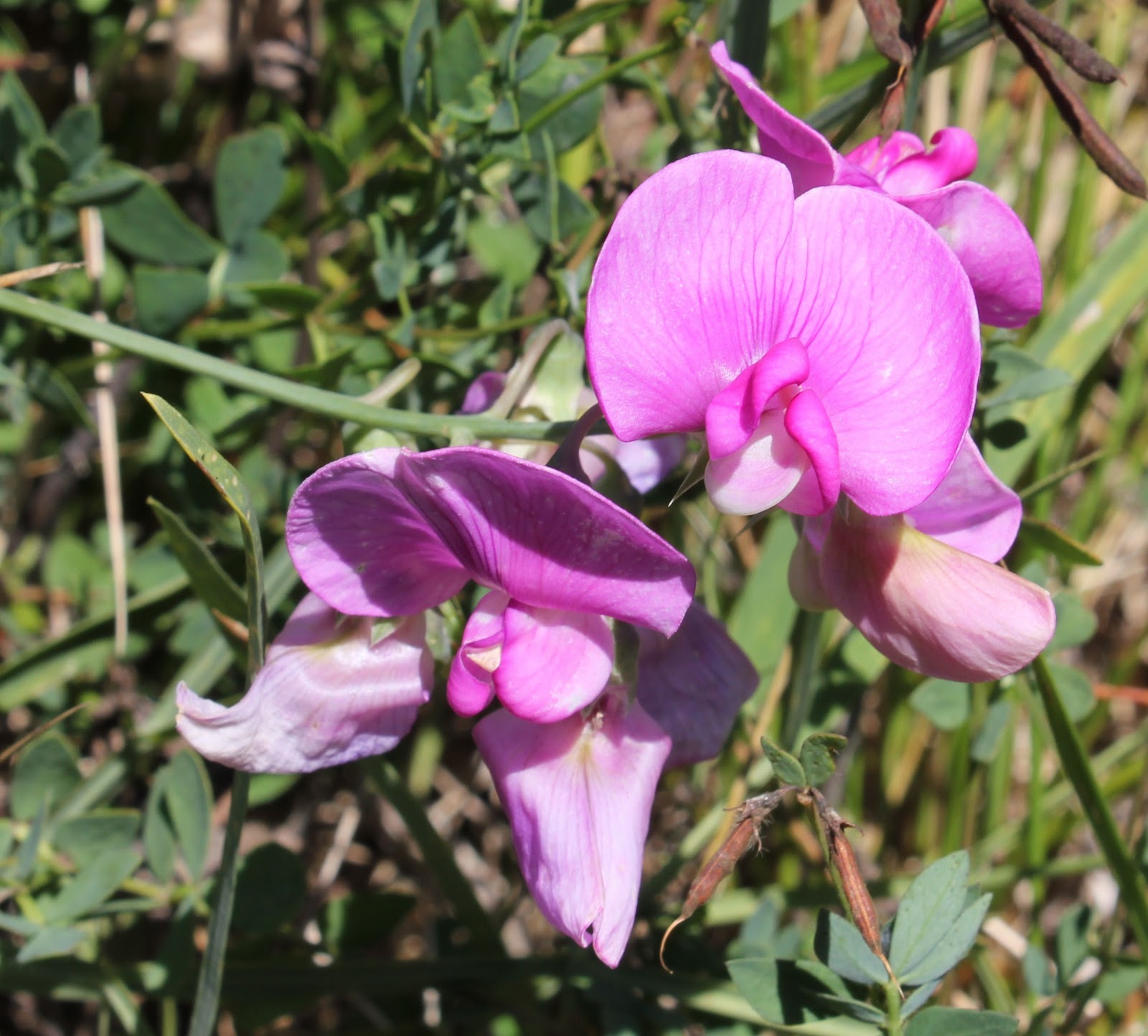
In preparation for the upcoming familial feeding frenzy, I have embarked on my own cleaning/shopping/cooking frenzy. In keeping with the spirit of celebration, I’m holding a mystery photo contest. The winner will receive leftover turkey shipped to his or her home.

Not really. Much of our leftover turkey will be sent to college with Sam to nourish him through his upcoming final exams. 

There are no prizes.

But there will be awards! 

All you have to do is guess what the photo is and tell me in the comments section. 
 
The answer will be posted on Saturday (11/26/11).

See you on the other side.


P.S. Is this one too easy?

Sunday, November 20, 2011

Friday, November 18, 2011

Overheard #170

"Panic is part of the process."

Wednesday, November 16, 2011

A Chance to Win 2012 CWIM

Shutta Crum is hosting a cool contest. She's giving away a copy of Children's Writers and Illustrators Market. Click the link for details.

Monday, November 14, 2011

Storyboarding Is Not Just for Picture Books Anymore


Novels in their early stages tend to be unwieldy collections of scenes. In order to become a novel, causality must be established. Each scene must lead inexorably (yet unpredictably) to the next. Tension, emotion and the presence of secondary characters should also be tracked. A storyboard can help. The entire technique is described in Writing Stories: Ideas, Exercises and Encouragement forTeachers and Writers of All Ages by Carolyn Coman, but here’s a brief overview.

  1. Draw a simple sketch depicting the main event in every chapter. (The art doesn’t have to be good.)
  2. Below the pictures, write a phrase describing the action. (Use an action verb.)
  3. Above the pictures state the primary emotion.
If you do this on index cards, it’s easy to rearrange the order of the scenes.

You can check for sequences where the action or tension is lacking. 
You can monitor the ebb and flow of emotions.

Here’s my example from Harry Potter and the Goblet of Fire, the scene where Harry fights Lord Voldemort in the graveyard.

Sunday, November 13, 2011

Friday, November 11, 2011

Overheard #169

"No one at this table needs to use a semicolon."

Thursday, November 10, 2011

Librarian in Paris

So far, my experience with Paris consists of aerial views and two four-hour layovers in the Charles De Gaulle Airport. Many Americans go to Paris to shop, and on my return trip from Italy, I was no different. I had finished my book, and I don’t yet own an e-reader. Thinking that the shops at Charles De Gaulle airport must sell books in English, I began my search, and was finally rewarded by finding an entire shelf of books written in my mother tongue. An elderly American couple joined me.

“How about that one?” the woman asked.

“I’ve read it,” the man said.
This conversation was repeated about ten times, and the man was starting to sound cranky. I couldn’t blame him. We were both faced with the prospect of traversing the Atlantic without a book. Most of the wife’s suggestions were thrillers or mysteries, so I handed him Eye of the Red Tsar by Sam Eastland.

“You might like this,” I said. “It’s historical fiction about the Russian revolution.”
“Oh, thank you!” The man rushed off to buy it. 

I’ve always wanted to be a librarian.

Monday, November 7, 2011

Real Writing

I’m going to continue my posts about things I learned at Honesdale, but this is about something I felt at Honesdale. The Whole Novel Workshop was an opportunity of a lifetime. It was a solid week of writing, complete with a brilliant critique of my entire novel, insightful comments from my peers, and spectacular food prepared by other people. I worried that I wasn’t accomplishing enough during my Opportunity Of A Lifetime. Since I returned home, I realized three things.  

1.  A revision of this magnitude requires hard thinking first and hard work second.   

2.  Real writing, for the most part, doesn’t happen in a cozy cottage surrounded by spectacular fall foliage. It happens around teenage rock bands that show up at dinnertime, mountains of laundry, and days when AWOL characters can’t be coaxed onto the monitor.  

3.  Writing must be done for its own sake. In the face of uncertain economic times and the changing publishing industry, the only thing a writer can do is make the writing as good as it can be.  

Sunday, November 6, 2011

Sunday

back at the Red Cedar River

The water is running faster than three weeks ago.

Most of the leaves have fallen.

Friday, November 4, 2011

Overheard #168

"I can’t tell you how many times I’ve crossed the street to avoid a palindrome."*


*Overheard statements do not necessarily reflect the views of the management.

Wednesday, November 2, 2011

Purposeful Drafts

Several years ago, I heard Jaïra Placide speak at an SCBWI conference. For me, the most important thing she said was, “Every draft should have a purpose.”

When revising, it’s easy to ignore the big issues and fiddle with words, but word tinkering should be left for the last step. I find that my revisions are most effective when I focus on a specific goal for each draft. These goals are large issues like adding personality to a secondary character, making a character’s voice consistent, or getting the characters into the action sooner.

At the Whole Novel Workshop in Honesdale, I was reminded that every draft should have ONE purpose. In my current revision, two of the main characters are exchanging roles, and it’s easy to be overwhelmed by the enormity of this task. I keep reminding myself that this draft is for stage management. All I’m doing is moving the characters around. At this point, it doesn’t matter if the writing is clunky or if the characters have lost their voices. I’ll fix those things in subsequent drafts.  

Saturday, October 29, 2011

Rick Steves' Post on Cinque Terre

Rick Steves wrote about his memories of Cinque Terre and the flood.

Friday, October 28, 2011

News from Cinque Terre

I heard from Christine who manages the B&B where we stayed in Manarola. Both of her emails follow: 

Dear Ann,
Thank you for writing to check on us.  All of us in Manarola, Riomaggiore and Corniglia are safe and were incredibly fortunate, as there was only minor damage in our villages from the storm.  The situation in Vernazza and in the old town of Monterosso is tragic.  They have been without water, electricity, gas and telephone service since Tuesday.  The situation is particularly difficult in Vernazza, as it is now only accessible by sea.  My husband went there today by boat with a group of volunteers from Manarola, to bring supplies and help with the cleanup.  He said that the conditions there are even worse than we had imagined.  The heavy rains caused a huge landslide at the top of the village, which diverted the river there onto the main street of the town.  The river brought with it mud and debris which now almost completely covers the main floor of the buildings all along the main street.  Several people are unaccounted for, and nearly all of the businesses in the town have been destroyed.  The cleanup efforts will likely take months, but the people of the Cinque Terre are very resilient, and are determined to recover from this terrible tragedy.  Thanks again for your concern.
Kind regards,
Christine and Family
Carugiu B&B

Dear Ann,
Thank you for the link to your blog.  You are welcome to include my e-mail.  Your pictures are beautiful!
My husband and I went to Vernazza by ferry today to help pump water from a friend’s house, but only residents were allowed to get off there,  so we dropped the pump off and continued along the coast.  The sea is filled with debris, but the mud that turned the water from blue to brown has started to settle.  There are numerous emergency crews working in Vernazza and Monterosso, and electricity has been restored.  Heavy equipment has been brought in by boat to remove the incredible amount of mud in the streets.  The Italian government has declared a state of emergency, so special funds are now available for cleanup and relief efforts.  Support has been pouring in from around the world, and is greatly appreciated by the locals.  Our communities are working very hard to return to normal as soon as possible.
Kind regards,
Christine

Overheard #167

"There is an ugly stage in ever painting just like there is in every manuscript."

Wednesday, October 26, 2011

Storms in Northern Italy

Tuscany and Cinque Terre have been devastated by storms. (Telegraph Article) I emailed the manager of the B&B where we stayed to ask if she and her family are all right, although I suspect internet connections won’t be working for some time. The damage was horrendous. Monterosso and Vernazza were “all but wiped out.” The people who live this beautiful place are in my thoughts. 

My pictures of Manarola can be seen here and here.

Tuesday, October 25, 2011

The Three Solution Approach

I just returned from the Whole Novel Workshop put on Highlights Foundation. Wow. It was great. I cannot claim it all smooth sailing. I’m doing a MAJOR revision. This is not mere whining. Those words were used by Stephen Roxburgh and Carolyn Coman. 

The biggest problem with my novel is point of view. In my first discussion with Stephen, we decided there were three possible approaches: 1) make my protagonist female, 2) write the novel in third person and make her female 3) switch the roles of the protagonist and one of the secondary characters. Stephen suggested that the first was the most conservative approach and I should start there. 

The process reminded me of my former life as a laboratory scientist. When something didn’t work, my husband would say, “Think of three ways to solve the problem and do them all.” I already had that skill set, so on the first full day, I rewrote my first chapter three ways. It was immediately obvious I should take approach #3. 

The Three-Solution-Approach works. Trust me. The other writers at the workshop started referring to it as “doing an Ann.”  

Sunday, October 16, 2011

Sunday

The Red Cedar River


Saturday, October 15, 2011

Whole Novel Workshop

Tomorrow I leave for Honesdale, PA to attend a Highlights Founders Workshop led by Carolyn Coman and Stephen Roxburgh. Serious revisions of SSA are in my immediate future.

Please check back tomorrow for some pictures of Michigan’s autumn. I may post periodically while I’m away.

Friday, October 14, 2011

Overheard #166

"I only try subtlety when I have to."

Wednesday, October 12, 2011

Macro Italy

I took a few macro shots in Italy.

I think this is a type of juniper. They grow everywhere.

twists

spikes

a wild orchid

These lizards are fast. This was the best shot of many tries.

sparkles

Oleander also grow in my hometown.

Tuesday, October 11, 2011

Pisa

We arrived in Pisa in the afternoon and set off on our Tower Quest. We’d walked about halfway there when the storm that had been brewing in Manarola hit Pisa.
We took shelter under a covered walkway.


Pisa is beautiful in the rain.

It started to hail. (Click on the picture to enlarge it.)

We ducked into this shop for espresso and sustenance. Eventually the rain lessened, and we continued our journey to the Tower.

Zach held the umbrella over the camera so I could take this picture.

Monday, October 10, 2011

The Mediterranean Sea

I grew up a mile from the Pacific Ocean, but this was my first view of the Mediterranean Sea. (Technically, the ocean off Cinque Terre is called the Ligurian Sea.) I was amazed first at the deep teal color of the water. The Pacific tends towards blues and grays. Second, I couldn’t believe how calm it was on the day we arrived. The Pacific, contrary to its name, always has waves.

This is an early morning shot of the main swimming area for Manarola. There is no sand, but people bask on the rocks and on the cement ramp.

We went swimming at the second beach because fewer people go there. If you enlarge the photo, you can see a ladder by the little breakwater. The water was surprisingly salty which made it easy to float.

I wasn’t the only person fascinated with the ocean.

See what I mean about the color?


On Sunday, the water started to get rougher.

A storm was blowing in.

Whitewater

Close up

Sunday, October 9, 2011

Manarola

Manarola is a magical little town on the Mediterranean Sea. The time we spent here was the best part of our trip. We climbed its hills, ate its wonderful pesto and pastries and swam in the lovely little cove. Many thanks to Kristen Wolden Nitz for suggesting we visit Cinque Terre.

Manarola is the second town in Cinque Terre. From south to north, they are Riomaggiore, Manarola, Corniglia, Vernazza, Monterosso. On this trip, we saw Riomaggiore (briefly) and Manarola. I guess we’ll have to go back to catch the rest.
I'm going to have to get a polarizing filter or figure out how to use GIMP to make the sky bluer. The above shot was taken in the early morning.

This is from the top of the town, looking down. Note the terraces for grapevines.

You can see the breakwater that protects the little harbor. When the weather gets rough, they lift the boats up up to the town with a winch.

This is where they grow grapes for wine. Someone calculated that there is more stone in the terraces of Cinque Terre than in the Great Wall of China. I have no way to verify this.

Cropped sunset

Manarola at night.

Friday, October 7, 2011

Overheard #165

"There are interesting things you can do when you integrate into the complex plane."

Wednesday, October 5, 2011

Via dell’ Amore

We traveled next to Cinque Terre, or Five Lands. They are small towns perched on the cliffs over the Mediterranean Sea. It was a gorgeous place, and I took a zillion pictures. In an effort to divide them into manageable blog posts, I’ll have one post on Via dell’Amore, one on the town of Manarola and one on the ocean.

The five towns were quite isolated until a railway line was built in the 1920s, and a trail was made between Riomaggiore, the first (southern most) town and its northern neighbor, Manarola. Landslides closed the path until after WWII when it was reopened and became a meeting place for boys and girls from the two towns. A journalist coined the name, and the path became Cinque Terre’s lover’s lane.

A hiking trail and a railroad now connect all five towns. Due to a landslide between Manarola (town #2) and Corniglia (town #3) and a railroad strike, we only saw Manarola. This was hardly a hardship, and we hope to return to see the rest.

Our first glimpse of Manarola as we walked along Via dell’ Amore from the train station in Riomaggiore.

These fences protect hikers from landslides.

A better view of the coast.

The rocks and retaining walls of Via dell’ Amore are covered with amorous graffiti. It is also traditional for couples to leave a small padlock attached to the fences as a token of undying love. This is the iconic statue for Via dell’ Amore, complete with padlocks. People also tie strings, bits of plastic bags or anything they can find to the fence.

We added a ribbon.

Sunset

Another sunset – because I can’t take this kind of shot in mid-Michigan.


Seagull

Saturday, October 1, 2011

Lucca

The resort arranged a brief afternoon trip to Lucca. I’m sure there is more to this town than we had time to discover.

The town is still enclosed by its ancient wall and has expanded upward, not outward. From the streets, all you can see is tall, old buildings rising above you. In some places, even the wall isn’t visible.

Throughout history, Lucca has had three walls. The first was a rectangular structure built by the Romans. A larger stone wall was built in medieval times. When cannons were invented, the medieval wall was reinforced. The Lucchesi built a 100-foot wide mound of dirt faced with bricks and devoted a third of their income for a hundred years to its construction. As it turned out, none of the other city states ever attacked Lucca. Now the wall has been converted to a park with a bike path, lawns and trees. The rounded area you see in the picture was where they used to have cannons.

Lucca was known for its silk trade and wealthy merchants flaunted their affluence by building towers. At one time the Lucca had 160 towers. This is in a space enclosed by a wall with a circumference of only 2.5 miles. The most famous is Torre Guinigi. We had a hard time finding it because you can’t see it behind other the tall buildings. I had to take a picture into the sun, but it was the only glimpse I was likely to get. This tower has a rooftop garden, but we didn’t have time to take the tour.

A lovely old church.

The view from the train station while we waited to travel to Cinque Terre.